Garage Organization Ideas: A Room-by-Zone System That Actually Lasts
A step-by-step plan for organizing a two-car garage — zones, wall storage, floor storage, and the ten-minute weekly reset that keeps it that way.

A garage is the room in the house that decides how organized the rest of the house is. Overflow ends up here first — old paint cans, half-broken tools, sports equipment nobody uses. Reorganizing a garage well is a one-weekend project and a ten-minute-per-week maintenance habit. This is the exact system I've used in three houses.
Step 1: The one-day purge
Before you buy any storage, everything comes out. Every bin, every rake, every mystery box. Set up three areas on the driveway: keep, donate, and trash. Most garages hold 30–50% items that haven't been touched in over a year — that's your donate/trash pile. Anything broken you've been meaning to fix "someday" is trash. Anything you last used in a previous house is donate. Be ruthless; a lean garage is what makes the rest of the system work.
Step 2: Design four zones
A well-organized garage has four zones: (1) tools and hardware, (2) outdoor/lawn care, (3) sports and recreation, (4) seasonal/long-term storage. Sketch the garage on paper, assign each wall to one zone, and stick to it. The most-used zone (tools) goes on the easiest-access wall; long-term storage goes in the highest, hardest-to-reach spots.
Step 3: Storage goes on walls first
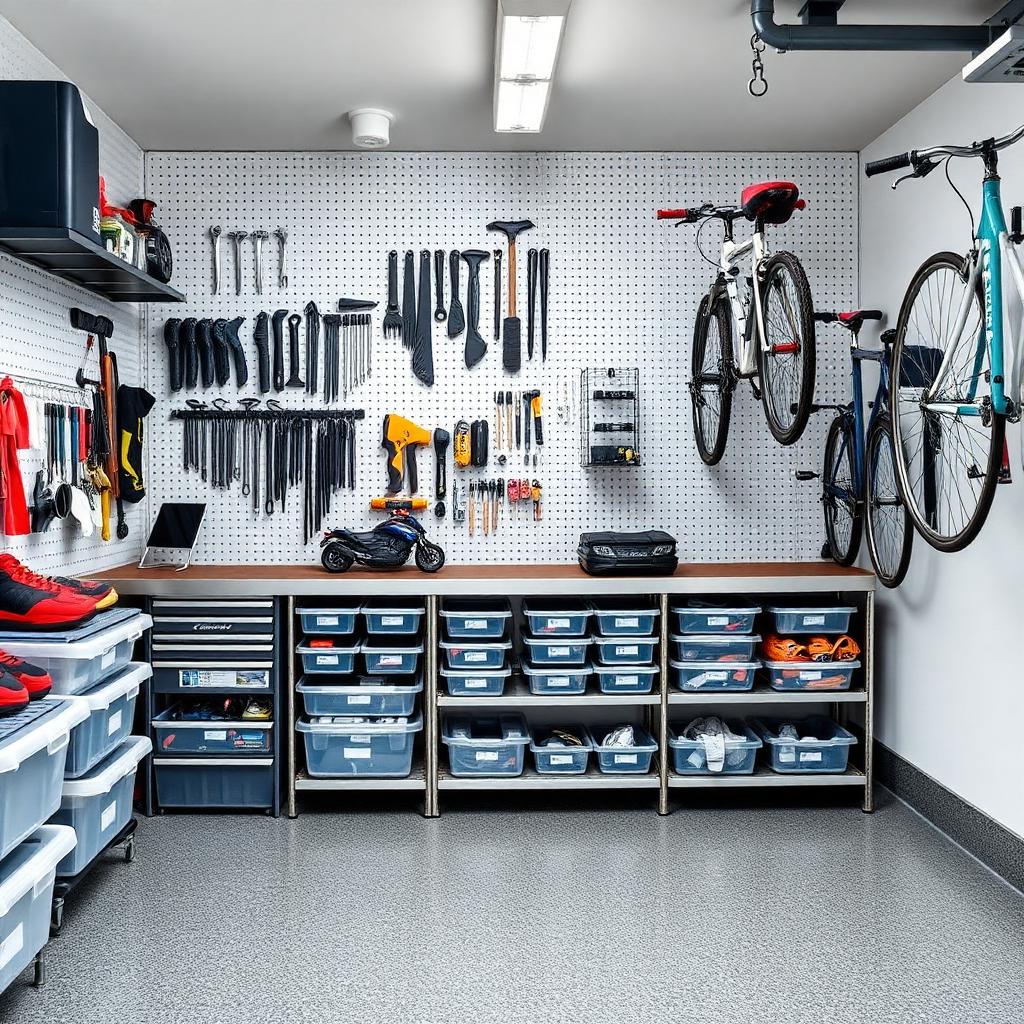
Floor space is the most valuable real estate in a garage. Anything that can hang, hangs. A full-wall pegboard for hand tools, wall-mounted brackets for shovels and rakes, bike hooks screwed into studs, and a slat wall for baskets and bins. Wall storage doubles usable space and makes cleaning the floor a five-minute job instead of a two-hour one.
Step 4: Metal shelves for the rest
Everything that can't hang goes on adjustable metal shelving. Industrial wire shelves (48"×24"×72") hold hundreds of pounds and let dust fall through instead of collecting. Two shelving units on the back wall of a two-car garage store almost all the "keep" items an average household owns. Skip the wood shelves — they sag and warp within a couple of humid summers.
Step 5: Clear labeled bins
Every item on the shelves lives in a clear plastic bin with a printed label. Clear bins let you see what's inside without opening them — this is the difference between organization that lasts and organization that decays into "which box is the camping stove in?" within six months. Standard 66-quart totes stack cleanly and are cheap in packs of six.
Step 6: Overhead and specialty hooks
Ceiling-mounted overhead racks store bulky-but-light items (holiday decorations, luggage, camping gear) in the wasted space above garage doors. Specialty hooks — for bikes, ladders, wheelbarrows, and hoses — turn awkward items into wall art. A single well-placed ladder hook can reclaim four feet of floor space instantly.
Step 7: Keep the floor empty
Nothing on the floor except vehicles and one mobile workbench or toolbox. This one rule sounds strict; it's the whole system's insurance policy. Anything on the floor gets stepped over, gets forgotten, and starts attracting more clutter. When in doubt, hang it, shelve it, or get rid of it.
Step 8: The workbench zone
Even if you're not a builder, one small workbench (4–6 feet) makes the garage functional for bike repairs, gardening prep, and small projects. Above it: pegboard for the ten tools you actually use. Below it: two rolling drawers for hardware and consumables. Above and to the side: a magnetic strip for screwdrivers and pliers. Task lighting matters — one LED shop light above the bench transforms the space.
The ten-minute weekly reset
Every Saturday morning, spend ten minutes putting everything back in its zone. Sweep the floor. Note anything new that has appeared — that's the item most likely to become permanent clutter. This weekly reset is what keeps the garage organized indefinitely; without it, entropy wins in six weeks.
Climate considerations
Garages are not climate-controlled. Anything sensitive to humidity (photos, documents, upholstery) should not live in a garage regardless of how organized it is. Batteries lose capacity in extreme heat; paint separates below freezing. If you live somewhere with harsh weather, plan for these items to move indoors seasonally.
Sequencing on a budget
If you can't buy everything at once, sequence in this order: (1) shelving units — biggest immediate impact; (2) clear bins — makes the shelves usable; (3) pegboard for tools; (4) bike/ladder hooks; (5) overhead racks; (6) workbench. Total cost for an average two-car garage using standard big-box products: $400–800. You can spread it across three or four paychecks and still be done in a month.
Frequently asked questions
- What is the best way to organize a garage?
- Purge first, then divide into four zones (tools, outdoor, sports, storage), put everything possible on walls, and use clear labeled bins on metal shelving for the rest.
- How much does it cost to organize a garage?
- $400–800 for a two-car garage using standard shelving, bins, and pegboard. Custom systems can run into the thousands.
- Should I hang bikes or lean them against the wall?
- Hang them. Wall or ceiling hooks reclaim floor space and prevent tire flats from long-term leaning.
Frequently asked questions
- What is the best way to organize a garage?
- Purge first, divide into four zones, put everything on walls where possible, and use clear labeled bins on metal shelving.
- How much does it cost?
- $400–800 for a two-car garage using standard shelving, bins, and pegboard.
- Hang bikes or lean them?
- Hang them — reclaims floor space and prevents tire flats from long-term leaning.