The 12 Best Indoor Plants for Beginners (and How to Keep Them Alive)
A Master Gardener's pick of forgiving, attractive houseplants — with the watering, light, and troubleshooting cheat sheet I wish I'd had on day one.

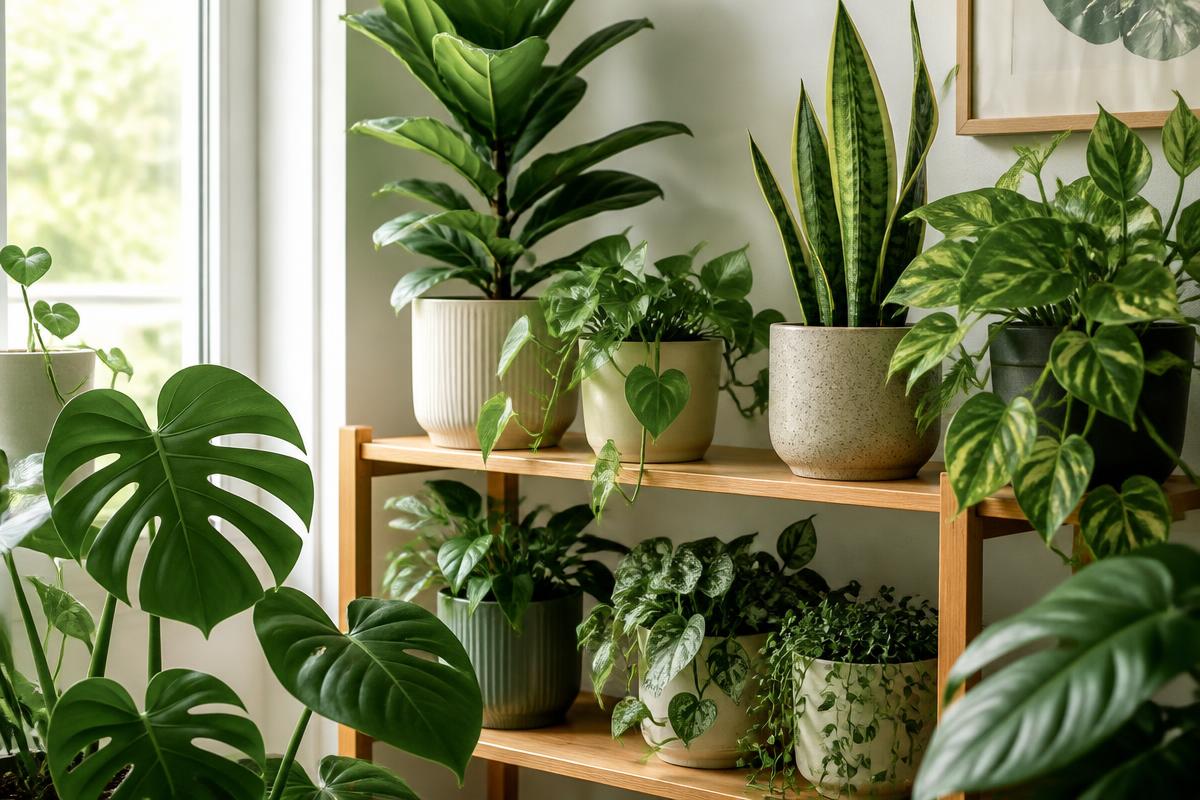
Most "I kill every plant" stories I hear are not about bad luck. They are about three avoidable mistakes: the wrong plant for the available light, watering on a schedule instead of by feel, and pots without drainage. Fix those three and almost any of the plants below will thrive for years.
Before you buy: three questions
Walk to the spot where the plant will live and answer these honestly:
- How many hours of direct sun does this spot get? Less than 2 hours = low light. 2–5 = medium. 6+ = bright. Most plant deaths happen because someone bought a sun-lover for a hallway.
- How dry is the air? Forced-air heat or AC dries leaves out fast. Tropicals (calathea, fittonia) will struggle in winter without a humidifier.
- How often will you actually look at it? Out-of-sight plants get watered late or not at all. Match plant tolerance to your honest attention span.
The 12 best beginner plants
1. Pothos (Epipremnum aureum)
The plant I recommend more than any other. Tolerates low to bright indirect light, recovers from drought, trails beautifully off a shelf, and roots in water for free new plants. Water when the top 2 inches of soil are dry.
2. Snake plant (Dracaena trifasciata)
The "I forgot you existed" plant. Architectural, slow-growing, and happy in everything from a dim bathroom to a sunny window. Overwatering is the only real way to kill it — wait until the soil is bone dry.
3. ZZ plant (Zamioculcas zamiifolia)
Glossy, almost plastic-looking leaves that handle low light gracefully. Stores water in rhizomes, so it would rather you forget it for three weeks than water it twice in one.
4. Spider plant (Chlorophytum comosum)
Produces baby plantlets on long stems that you can snip and pot up. Bright indirect light, weekly water, and it will reward you with a steady supply of new plants to give away.
5. Heartleaf philodendron
Pothos's gentler cousin — softer leaves, slightly more tolerant of low light. A great desk or shelf plant.
6. Cast iron plant (Aspidistra elatior)
True to its name. Survives deep shade, cool rooms, and irregular care. Slow-growing, so buy it the size you want.
7. Chinese evergreen (Aglaonema)
Patterned silver-and-green leaves, low-light tolerant, and one of the easiest "interesting-looking" plants for beginners.
8. Peace lily (Spathiphyllum)
Tells you when it is thirsty — the leaves droop dramatically, then perk back up within hours of watering. White flowers in medium light.
9. Rubber plant (Ficus elastica)
Statement floor plant with thick burgundy leaves. Bright indirect light; let the top inch dry between waterings.
10. Monstera deliciosa
The famous split-leaf. Less fussy than its Instagram fame suggests, as long as you give it bright indirect light, a moss pole, and water when the top 2–3 inches of soil dry out.
11. Parlor palm (Chamaedorea elegans)
Soft, fern-like fronds. Tolerates low light better than most palms and stays a manageable 2–4 feet tall indoors.
12. Hoya carnosa
Waxy trailing leaves, almost succulent in their water storage. Bright light, infrequent watering, and patient gardeners are rewarded with clusters of pink, sweet-smelling flowers after a year or two.
How to water (the right way)
Stop watering on a calendar. Start watering by feel. Stick a finger 2 inches into the soil — if it comes out clean and dry, water. If soil clings to it, wait. When you do water, water thoroughly: enough that water runs out the drainage hole. Then dump the saucer. Plants die from sitting in water far more often than from underwatering.
Reading the light in your home
"Bright indirect" means within 3–4 feet of an unobstructed window, but not in the path of direct sun. "Medium" is 5–8 feet from a window or right beside a north-facing one. "Low" is anything further, or any spot where you would need a lamp on to read during the day. Most homes have far less light than people assume — when in doubt, measure with a free light-meter phone app for a few days.
Troubleshooting common problems
- Yellow leaves: almost always overwatering. Let soil dry further, check drainage.
- Crispy brown tips: low humidity or salt buildup. Run distilled water through the pot once a month.
- Long stretchy stems: not enough light. Move closer to a window.
- Leaves falling off after moving: normal stress response, will pass in 2–3 weeks.
- Fungus gnats: let soil dry, top with 1/2 inch of horticultural sand, use yellow sticky traps.
Seasonal care: what changes through the year
Houseplants are not static — they respond to the same seasons your garden does, just indoors. From late October through February, growth slows dramatically. Water roughly half as often as in summer, stop fertilizing entirely, and resist the urge to repot. From March through September, plants enter active growth: water more often, feed monthly with a balanced liquid fertilizer at half strength, and repot any plant that has become root-bound. Rotating each pot a quarter turn once a week keeps growth even and prevents the lopsided lean toward the window that develops over a few months otherwise.
When and how to repot
Most houseplants want a fresh pot every 18–24 months. Telltale signs: roots circling the bottom of the pot, water running straight through without absorbing, or growth slowing despite good light and feeding. Repot one size up — going from a 4-inch to a 6-inch pot, not straight to a 10-inch — because oversized pots hold too much wet soil and rot roots. Use fresh potting mix appropriate to the plant (a general indoor mix for most; a chunkier cactus or aroid blend for plants that want fast drainage), water thoroughly once, then leave the plant in indirect light for a week to recover before resuming a normal routine.
One last point on plant choice: stop trying to keep alive a plant that hates your conditions. Houseplant guilt is real, but the right plant in the right spot thrives effortlessly. If a fiddle leaf fig keeps dropping leaves in your apartment, that is the plant telling you it wants someone else's apartment. Swap it for a pothos or ZZ plant and move on — the goal is a home that feels alive, not a museum of survivors.
Frequently asked questions
The most common reader questions I get about starting an indoor plant collection, answered below.
Frequently asked questions
- How often should I water my houseplants?
- There is no universal schedule — water when the top 1–2 inches of soil are dry to the touch. For most beginner plants in a normal home, that lands somewhere between every 7 and 14 days.
- Do houseplants really clean the air?
- The famous NASA study used very high plant densities in sealed chambers. In a normal home, plants make a small contribution to air quality — the bigger benefits are psychological and aesthetic.
- Why do my plant leaves keep turning yellow?
- Nine times out of ten it is overwatering. Let the soil dry further, check that the pot drains freely, and never let the plant sit in standing water.