Raised Bed Gardening: A Complete Beginner's Guide
Everything you need to plan, build, fill, and plant a raised bed that produces real food — from soil ratios to spacing charts.

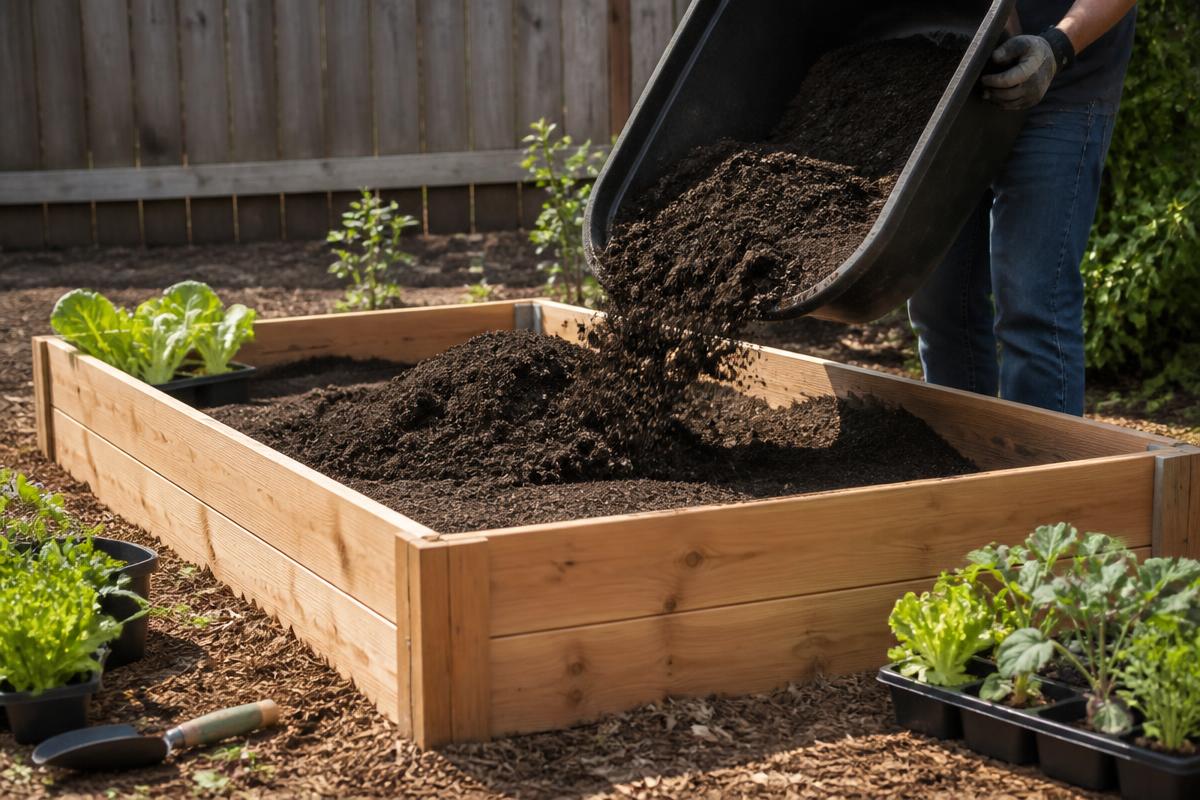
A raised bed is the single best investment a new vegetable gardener can make. It bypasses bad native soil, drains better, warms up faster in spring, and physically defines the space — which, more than anything else, is what keeps a garden from sliding into chaos. After ten years of growing food in raised beds on the Pacific coast, here is the guide I'd hand my own past self.
Why raised beds outperform in-ground
In a typical backyard with compacted clay, gravelly fill, or unknown construction debris, raised beds are not a luxury — they are how you get a harvest in year one instead of year three. They also reduce bending, keep pets and wildlife out more easily, and let you control soil composition precisely. Trials by university extension services consistently show 20–40% higher yields from raised beds in the first three seasons compared to amended in-ground plots.
Size, depth, and siting
Width: never wider than you can reach across comfortably from one side. For most adults, that is 4 feet maximum. Wider beds force you to step into them, which compacts the soil and defeats the purpose.
Length: 8–10 feet is the sweet spot. Longer beds bow outward over time unless you brace the middle.
Depth: 10–12 inches is the minimum for leafy greens, herbs, beans, and bush tomatoes. 18 inches is better for root crops, indeterminate tomatoes, and anything that will overwinter.
Siting: 6+ hours of direct summer sun is non-negotiable for fruiting crops. Run beds north-to-south so the morning sun reaches both sides. Stay at least 3 feet from fences for airflow and access.
Materials: what to use, what to avoid
Best: untreated cedar, redwood, or black locust — naturally rot-resistant, last 10–15 years.
Good: Douglas fir or pine, lasts 5–7 years untreated. Cheaper, easier to find.
Also good: galvanized steel stock tanks (drill drainage holes), corten steel, concrete blocks.
Avoid: railroad ties (creosote), older pressure-treated lumber from before 2003 (CCA arsenic). Modern ACQ-treated lumber is widely considered safe for vegetable beds by most extension services, but if you have any doubt, line the inside with heavy plastic.
The right soil mix (the 1-1-1 rule)
The mix that has produced the best results for me, and is the standard recommendation from the Square Foot Gardening tradition, is by volume:
- 1/3 high-quality topsoil or screened loam
- 1/3 compost (ideally from 3+ sources — leaf mold, mushroom compost, aged manure)
- 1/3 coarse aeration (peat moss alternative like coco coir, or perlite/pumice)
For a 4×8×12" bed, that is roughly one cubic yard of total mix. Order in bulk rather than bags — bagged "garden soil" is usually too dense and expensive at scale.
What to plant the first year
Resist the urge to grow everything. A 4×8 bed comfortably holds:
- 2 tomato plants (caged or staked, in the back)
- 1 row of bush beans (succession-sown every 3 weeks)
- 4–6 lettuce or salad greens
- A patch of basil, parsley, and chives
- 2–3 pepper plants
This produces meaningful, repeated harvests of things you actually eat, instead of one zucchini explosion in August.
Watering and feeding
Raised beds dry out faster than in-ground gardens — that is the price of better drainage. A simple drip irrigation kit on a battery timer is the highest-leverage purchase you can make after the bed itself. Aim for 1 inch of water per week, delivered in two or three sessions, at the soil line.
Feed at planting with a balanced organic granular fertilizer worked into the top 4 inches, then side-dress mid-season for heavy feeders (tomatoes, peppers, squash) with compost or a liquid kelp/fish emulsion every 2–3 weeks.
Season extension
The defined edges of a raised bed make hoops, row cover, and cold frames trivial to add. A 6-foot length of 1/2-inch PVC arched over the bed and pinned with rebar will hold lightweight row cover for early-spring planting or late-fall greens, easily extending your harvest by 6–8 weeks on each end of the season.
Year-round bed maintenance
A raised bed is a small, intensive ecosystem and it loses about an inch of volume each year as compost breaks down. Top up every spring with a 1–2 inch layer of fresh compost worked lightly into the surface — this single step does more for long-term productivity than any fertilizer regimen. In fall, after the last harvest, chop and drop spent plants (except diseased ones) directly onto the bed and cover with a 3-inch blanket of shredded leaves. By spring the worms will have pulled most of it down and the bed will be ready to plant again with minimal effort.
Every third year, take a closer look at structure. Check the corners of wooden beds for rot, re-level any boards that have heaved with frost, and refresh the pathway mulch around the bed. A well-maintained cedar bed easily lasts 15 years; a neglected one fails at year seven.
Common pests and disease, ranked by impact
In my experience the three pest problems that account for 80% of raised bed losses, in order, are slugs, squash bugs, and tomato hornworms. Slugs are managed with iron phosphate bait (safe around pets and children), a 4-inch copper tape ring around the bed top, or simply hand-picking after dark with a flashlight for two consecutive nights. Squash bugs require vigilance — flip leaves twice a week in early summer and crush the bronze egg clusters before they hatch. Hornworms are dramatic but easy: a five-minute inspection on tomato plants every few days finds them while they are still small.
For disease, the highest-leverage practice is crop rotation. Don't plant tomatoes, peppers, eggplants, or potatoes in the same bed two years in a row — they share soil-borne diseases (early blight, verticillium wilt) that build up over time. A simple three-year rotation (nightshades → legumes → leafy greens or roots) breaks most cycles without the complexity of a five- or seven-year plan.
Real cost and payback
A 4×8 cedar bed in 2026 costs roughly $180 in lumber, $40 in hardware, and $250–300 in bulk soil and compost — call it $500 total, or about $1,000 for a pair. Annual maintenance (compost top-up, seeds or starts, fertilizer) runs $80–120 per bed. With a reasonable planting plan, a single well-tended 4×8 bed produces $300–500 of vegetables per year at grocery store prices, paying back the build cost in roughly two seasons and producing essentially free food after that — alongside the harder-to-measure benefits of time outside, better flavor, and knowing exactly how your food was grown.
Frequently asked questions
Real questions from readers building their first raised bed garden.
Frequently asked questions
- How deep should a raised bed be?
- 10–12 inches works for most vegetables and herbs. Go to 18 inches if you want to grow carrots, parsnips, or large indeterminate tomatoes without limitation.
- Do I need to line the bottom of a raised bed?
- Line the bottom with cardboard to smother weeds for the first season. Skip plastic liners — they trap water and rot the wood faster.
- How much soil do I need for a 4x8 raised bed?
- For a bed 12 inches deep, you need 32 cubic feet, or about 1.2 cubic yards of soil. Order bulk; bagged soil costs roughly 3x more for this volume.