Container Gardening for Beginners: A Complete First-Year Guide
Everything a beginner needs to grow vegetables, herbs, and flowers in pots — pot sizes, soil, watering, feeding, and the ten plants most likely to succeed in your first year.
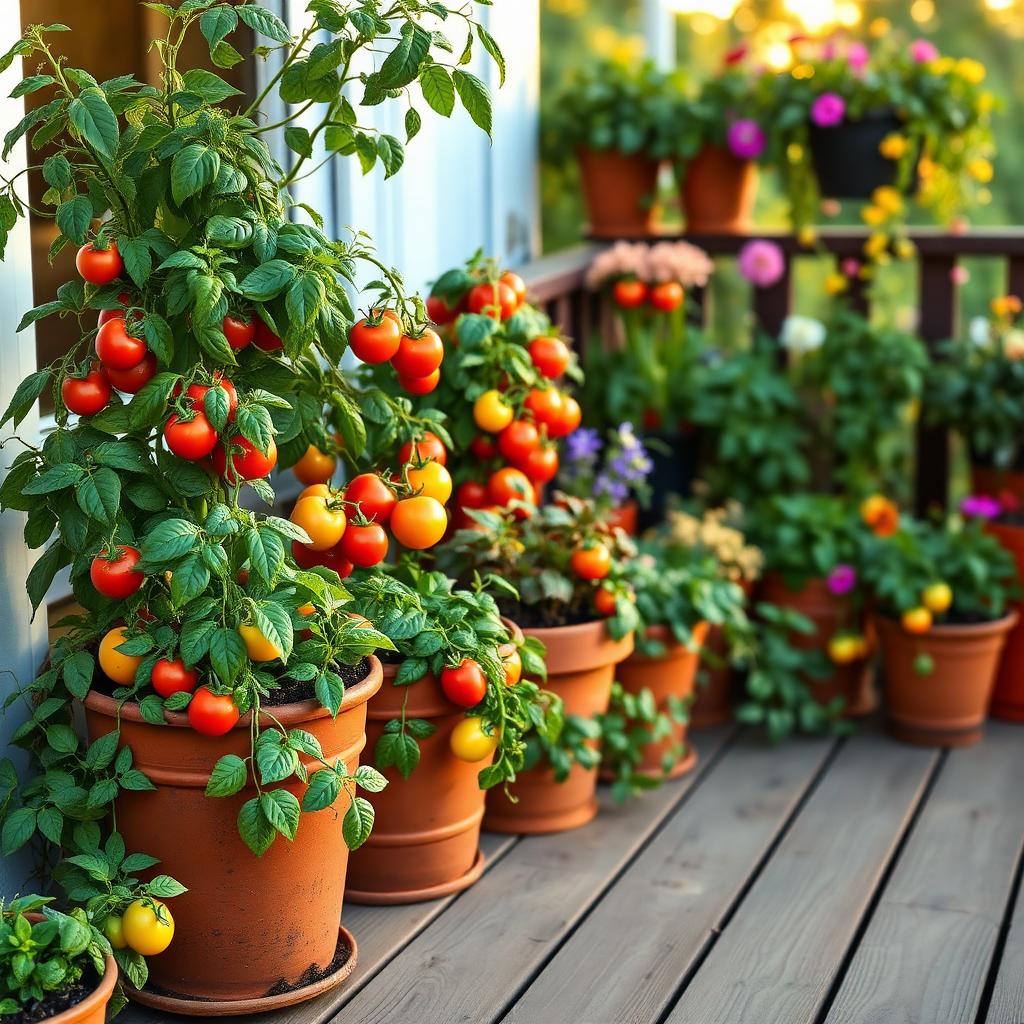
Container gardening is where every gardener I know actually started — a single tomato on a fire escape, a windowsill full of basil, three pots of pansies. It's also where most beginners give up, usually because of one of five fixable mistakes. This guide walks through the entire first year: what to buy, what to plant, what to expect, and what to do when things start to look weird.
Why start with containers
Containers give you control that in-ground gardens don't: perfect soil every time, easy to move if the sun changes, no digging, and no established weed seed bank. They also make failure cheap — a dead plant in a pot is a $6 lesson, not a raised bed you now regret. Almost every vegetable, herb, and flower will grow in a container as long as the container is big enough.
Step 1: Watch the sun for a week
Before you buy a single plant, spend a week noticing how many hours of direct sun your growing spot actually gets. "Sunny" is not a number. Vegetables need 6–8 hours; most herbs, 4–6; leafy greens and shade-tolerant flowers, 3–4. Take photos at 9 a.m., noon, and 4 p.m. for three days. If you're seeing less than 4 hours of direct sun anywhere, plan around greens and herbs, not tomatoes.
Step 2: Match pot size to plant
The single biggest beginner mistake is using pots that are too small. Roots need room, and small pots dry out in hours in summer heat. Rough minimums: 2–3 gallons for lettuce, herbs, and small flowers; 5–7 gallons for peppers and bush beans; 10–15 gallons for a single tomato, zucchini, or cucumber; 15–25 gallons for a small dwarf fruit tree. When in doubt, go bigger.
Step 3: Drainage, always
Every pot needs holes in the bottom. Water that can't drain drowns roots faster than heat does. Pretty pots without holes are for cover-potting only — you keep the plant in a plastic nursery pot inside the decorative one and lift it out to water. Don't waste money on a "drainage layer" of gravel; modern research shows it actually raises the water table inside the pot, making the problem worse.
Step 4: Use potting mix, not garden soil
Garden soil compacts hard in containers and cuts off oxygen to roots. Buy actual potting mix — the bag will say "for containers." A quality mix contains peat or coco coir, perlite or pumice, and a small starter charge of fertilizer. Cheap mix is often too dense; a mid-range bag is worth the extra few dollars for a season of better performance. Refresh the top 2–3 inches of mix each year rather than replacing it all.
Step 5: Water deeply, not often
Deep, less-frequent watering trains roots to grow down and makes plants more drought-tolerant. Water until it runs freely out the drainage holes; then wait until the top inch of soil feels dry before watering again. In hot summers, big containers may need daily water; in cool spring, once every 3–4 days is normal. Feel the soil — don't follow a calendar.
Step 6: Feed lightly, feed regularly
Container plants can't send roots out looking for nutrients — you have to bring the nutrients to them. A liquid fertilizer at half strength every two weeks beats a heavy dose once a month. For vegetables, look for a balanced organic fertilizer (numbers like 4-4-4 or 5-5-5). Flowers benefit from a bloom-boosting mix (higher middle number) once buds appear. Overfeeding causes leaf burn — err on the side of less.
10 plants that almost never fail
For a first-year container garden, plant from this list before anything exotic:
- Cherry tomatoes — one plant in a 10-gallon pot yields 50+ tomatoes
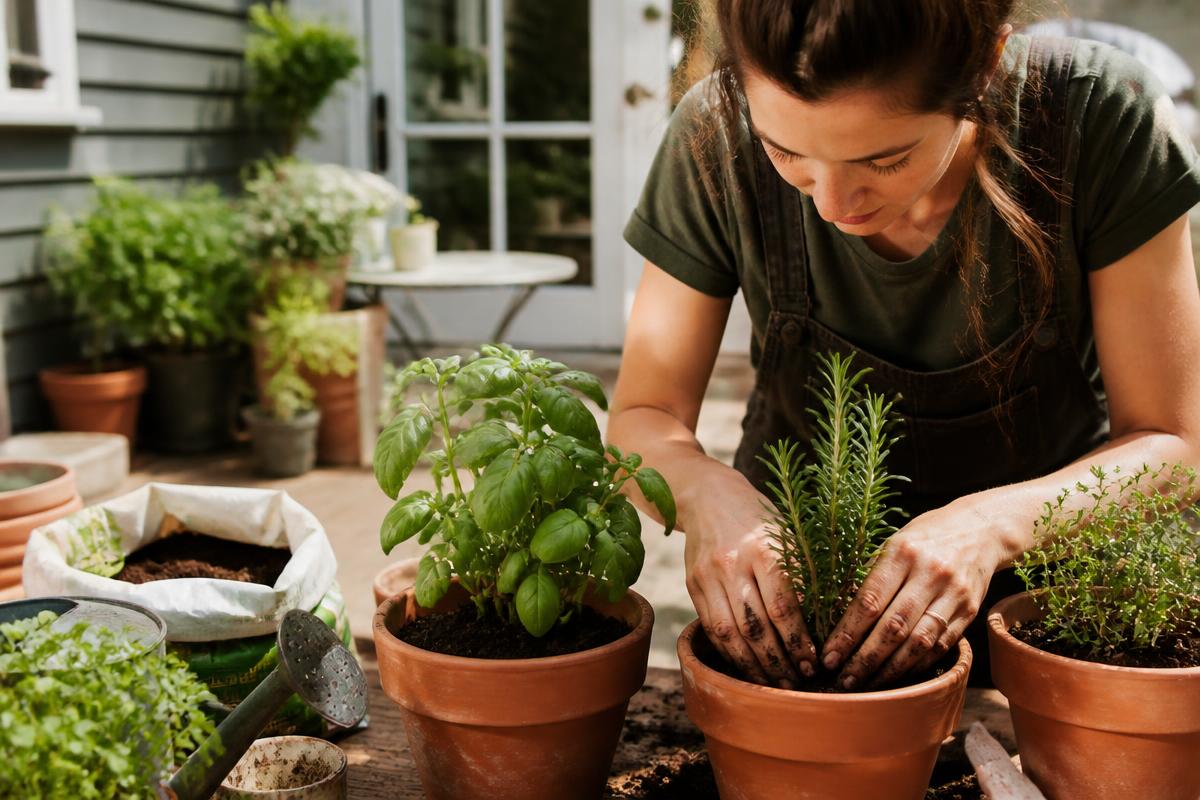
- Basil — pinch flowers to keep leaves coming all summer
- Mint — must be in its own pot; will take over anything else
- Lettuce — cut-and-come-again varieties give weeks of salad
- Bush beans — no trellis, harvest in 55 days
- Chives — perennial, flowers are edible
- Pansies and violas — cool-season color from spring to fall
- Marigolds — impossible to kill, deter some pests
- Peppers — one plant per 5-gallon pot, love heat
- Rosemary — near-drought-proof once established
Pests and problems
Aphids are the most common pest in container gardens — a strong blast of water knocks them off, and repeating for three days usually solves the problem. Yellow leaves usually mean overwatering, not underwatering; brown crispy edges usually mean the opposite. If a plant looks unhappy, check the soil moisture first, sun exposure second, and pests third. Nine times out of ten it's water.
Extending the season
Containers give you a big seasonal advantage: you can move them. Start cold-tolerant plants (lettuce, peas, pansies) outdoors 4–6 weeks earlier by pulling pots inside on frost nights. In fall, drag tender plants (peppers, basil) into a garage or covered porch when temperatures drop. A single mobile pot of tomatoes can produce fruit weeks longer than an in-ground plant in the same yard.
Frequently asked questions
- What is the easiest vegetable to grow in a container?
- Cherry tomatoes, lettuce, and bush beans are the three most forgiving. All three tolerate small mistakes in watering and feeding.
- Do I need to fertilize container plants?
- Yes. Potting mix has a small starter charge of nutrients that runs out in 4–6 weeks. After that, plants depend on you.
- Can I reuse potting soil next year?
- Yes, if it looks and smells healthy. Refresh the top 2–3 inches with fresh mix and mix in compost or slow-release fertilizer before replanting.
Frequently asked questions
- What is the easiest vegetable to grow in a container?
- Cherry tomatoes, lettuce, and bush beans are the most forgiving.
- Do I need to fertilize container plants?
- Yes — potting-mix nutrients run out in 4–6 weeks, then plants depend on you.
- Can I reuse potting soil next year?
- Yes if it smells healthy. Refresh the top 2–3 inches with fresh mix and compost.