Low-Maintenance Perennials: 12 Plants That Thrive on Neglect
Twelve tough, drought-tolerant perennials that come back every year without babying — plus how to combine them for continuous bloom from May through October.

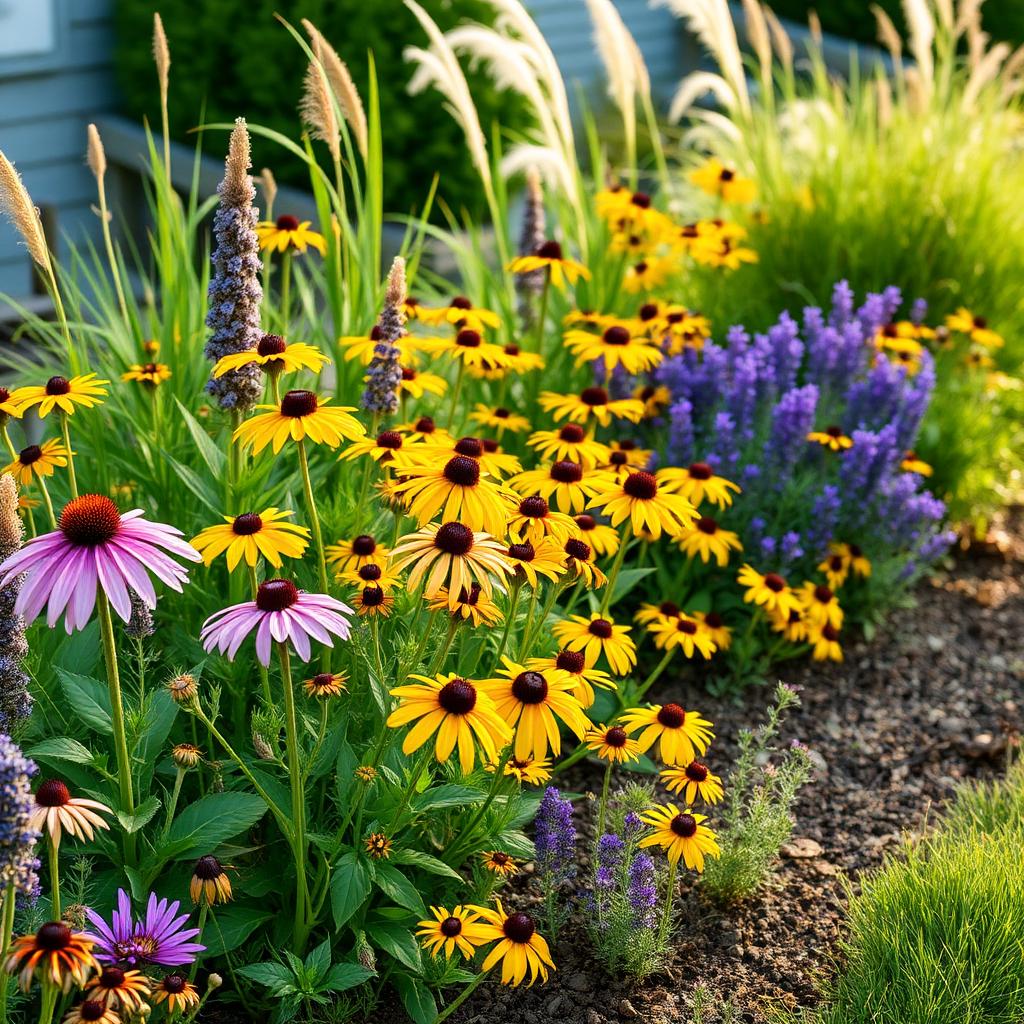
A low-maintenance perennial garden is not a garden you never touch — it's a garden that doesn't punish you when you skip a weekend. These twelve plants have earned space in my beds through years of drought, neglect, deer visits, and occasional total abandonment. They are ordered by how bulletproof they actually are.
Why perennials pay off
Annuals need replanting every year — cost, time, and disturbed soil. Perennials return, spread, and often improve for the first 3–5 years. A bed of tough perennials becomes cheaper and easier every season while an annual bed stays exactly as expensive. The catch: perennials look sparse the first year, decent the second, and full by the third. Plant early; wait patiently.
1. Purple coneflower (Echinacea purpurea)
Native to the eastern US, tolerant of clay, drought, and heat. Blooms July through frost with a light haircut mid-summer. Goldfinches strip the seedheads in fall — leave them standing all winter. Zones 3–9. Deer usually ignore it.
2. Black-eyed Susan (Rudbeckia fulgida 'Goldsturm')
The classic yellow daisy of American meadows. Once established, spreads slowly into big drifts. Full sun, average soil. Cut back in early spring; don't touch it the rest of the year. Zones 4–9.
3. Russian sage (Perovskia atriplicifolia)
Silver stems, tiny lavender flowers, drought-proof once established. Grows 3–4 feet in a season. Only maintenance: cut to 6 inches in early spring. Loves poor soil; overfeeding makes it flop. Zones 4–9. Pollinator magnet.
4. Catmint (Nepeta 'Walker's Low')
Not catnip. Long-blooming lavender-blue flowers from May through August. Shear back by half after the first flush and it reblooms into fall. Deer- and rabbit-resistant. Zones 3–8. One of the best plants for a border edge.
5. Daylily (Hemerocallis)
Almost impossible to kill. Each flower lasts one day, but a mature clump produces hundreds. Reblooming varieties like 'Stella d'Oro' and 'Happy Returns' flower May through September. Full sun to part shade. Zones 3–9.
6. Sedum 'Autumn Joy'
Succulent leaves store water, so it survives drought without complaint. Pink flowerheads open in September and turn rust-red into winter. Never needs deadheading; cut old stems in spring. Zones 3–10. Bees love it.
7. Coreopsis (Coreopsis verticillata 'Moonbeam')
Fine-textured foliage, pale-yellow flowers all summer. Shear lightly after the first bloom cycle for a second flush. Full sun; tolerates poor soil. Zones 3–9. One of the longest-blooming perennials you can plant.
8. Perennial salvia (Salvia nemorosa 'Caradonna')
Deep violet-blue flower spikes in May–June, again in August if you cut it back. Deer- and rabbit-proof. Loves hot dry sites. Zones 4–8. A backbone plant in any low-maintenance border.
9. Shasta daisy (Leucanthemum × superbum 'Becky')
The classic white daisy — 'Becky' is the best-performing cultivar, holding upright without staking. Blooms mid-June to August. Divide every 3–4 years to keep vigor. Zones 5–9.
10. Yarrow (Achillea millefolium)
Ferny foliage; flat-topped flowers in yellow, pink, red, or white. Absurdly drought-tolerant once established — perfect for the strip along a driveway that gets no attention. Zones 3–9.
11. Peony (Paeonia lactiflora)
Slow the first two years; unstoppable after that. A well-sited peony outlives most gardeners — 50-year-old plants are common. Full sun, plant crowns just 1–2 inches deep. One late-spring bloom flush, and beautiful foliage all summer. Zones 3–8.
12. Ornamental grasses (Panicum, Calamagrostis, Miscanthus)
Not flashy, but they carry the garden through winter with texture and movement. Cut to 6 inches in early spring; ignore the rest of the year. Native switchgrass (Panicum virgatum) and 'Karl Foerster' feather reed grass are two of the toughest and most upright choices. Zones 4–9.
Combining for continuous bloom
Choose one plant from each bloom window: spring (peony, salvia, catmint), early summer (shasta daisy, coreopsis, yarrow), mid summer (coneflower, black-eyed Susan, daylily), late summer/fall (sedum, russian sage, grasses). A border with all four windows covered blooms May through October with no annual replanting.
Real-world care schedule
Twice a year is enough for a mature low-maintenance perennial bed: (1) an early-spring cleanup in March — cut everything back, top-dress with an inch of compost; (2) a mid-summer light shearing of the catmint, salvia, and coreopsis to trigger rebloom. No supplemental water after year one except during severe drought. No feeding beyond the spring compost. That's it.
Frequently asked questions
- What is the most low-maintenance flowering perennial?
- Sedum 'Autumn Joy' — it survives drought, ignores poor soil, blooms in fall, and needs almost nothing from you.
- When should I plant perennials?
- Early spring or early fall, when temperatures are cool and rainfall is reliable. Avoid planting in mid-summer heat unless you're prepared to water daily.
- How long do perennials live?
- Most 8–15 years; peonies and daylilies 30+; ornamental grasses 20+. Dividing every 3–5 years keeps them vigorous.
Frequently asked questions
- What is the most low-maintenance flowering perennial?
- Sedum 'Autumn Joy' — drought-tolerant, ignores poor soil, blooms in fall, needs almost nothing.
- When should I plant perennials?
- Early spring or early fall, when temperatures are cool and rainfall is reliable.
- How long do perennials live?
- Most 8–15 years; peonies and daylilies 30+; grasses 20+ with occasional division.