Vegetable Garden Layout Ideas: 9 Plans That Maximize Yield in Any Space
Nine tested vegetable-garden layouts for small yards, raised beds, and traditional rows — plus the spacing, sun, and companion-planting rules that make each one work.

A good vegetable garden layout is 80% of the harvest. Space plants too tightly and you get disease; space them too loosely and you waste ground and invite weeds. These nine layouts cover almost every real-world situation — a corner of a suburban yard, three raised beds on a patio, a long narrow side yard, a shared community plot — and each one has a specific reason to exist.
First, the four layout principles
Before choosing a specific layout, four rules apply to all of them: (1) put the tallest plants on the north side so they don't shade shorter ones; (2) leave paths wide enough to kneel in — 18 inches minimum; (3) keep water within a hose-length of every bed; (4) plant what you actually eat. A beautiful garden of kohlrabi that no one in the house likes is worse than three pots of tomatoes.
1. Classic row layout
Long straight rows with paths between. Best for larger spaces (200+ sq ft) and mechanized weeding or hoeing. Space rows wide enough to walk with a wheelbarrow — 30–36 inches for main rows, 18 inches between smaller crops. Downsides: less yield per square foot than block planting, and paths become weed nurseries if not mulched. Upside: easy to plan, easy to harvest, easy to rotate year to year.
2. Block or square-foot layout
Divide the bed into 1-foot squares and plant a specific number of plants per square — 1 tomato, 4 lettuces, 9 spinach, 16 carrots. Popularized by Mel Bartholomew's Square Foot Gardening, it gets 2–4× the yield of a row garden in the same space. Best for raised beds 4 feet wide (so you can reach the center from both sides). The rigidity is a feature — you spend less time planning and more time growing.
3. Keyhole layout
A round or horseshoe-shaped bed with a narrow path cut in so you can reach the center. Perfect for kitchen herb gardens and small salad plots — no space is out of reach and you can pack plants close because there's no wasted path. A 6-foot keyhole bed with a 2-foot access path feeds most households in salad greens and herbs from May to October.
4. Three Sisters
Indigenous North American layout: corn, pole beans, and squash grown together. Corn provides a trellis for beans; beans fix nitrogen for the corn; squash spreads across the ground and shades out weeds. Requires a full-sun area of at least 10×10 feet and patience — timing the plantings takes practice — but it's one of the most efficient and beautiful layouts once it clicks.
5. Vertical + ground combo
Grow up, not out. A single 4×8 bed with an arch trellis at one end can produce as much as a 4×20 bed of ground-only plants. Cucumbers, pole beans, snap peas, small melons, and indeterminate tomatoes all climb happily. Ground crops (lettuce, radishes, herbs) grow in the shade below the vertical crops, extending the season for cool-loving greens into summer.
6. Potager (mixed vegetables + flowers)
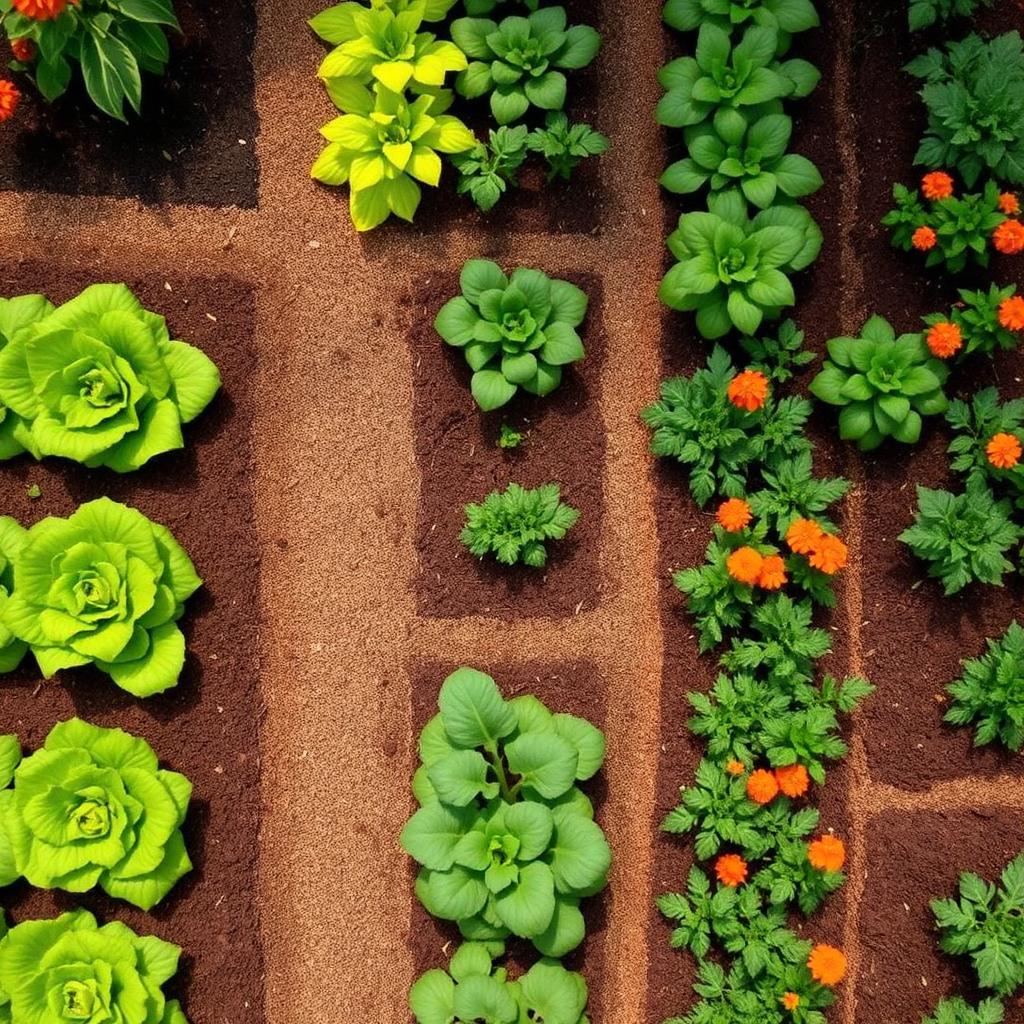
A French kitchen-garden tradition of mixing edibles and ornamentals in geometric beds. Marigolds, nasturtiums, borage, and calendula pull in pollinators and deter certain pests while looking beautiful. The design constraint (repeating shapes, borders of low herbs) forces good structure. Best for front-yard gardens or anywhere the garden will be seen as much as harvested.
7. Salad-bar bed
A single 3×6 raised bed dedicated to cut-and-come-again greens: leaf lettuce, arugula, spinach, mustard, kale. Sow a new short row every 2 weeks from spring through fall. One bed produces salad for two people continuously for 5–6 months. Best layout for beginners because failures are cheap (greens grow fast) and successes are immediate.
8. Container cluster
For balconies, patios, and rental yards: a cluster of large containers (10+ gallons each) grouped around a central path. Advantages: perfect soil, no digging, easy to move. Layout tip: put the biggest, most sun-hungry plants (tomatoes, peppers) on the outside; herbs and greens closer to the door where you'll actually harvest them. See our container-gardening guide for pot-sizing rules.
9. Raised U-shape
Three raised beds arranged in a U with a central standing area. Every inch of every bed is reachable without stepping in, drip irrigation can be run in a single loop, and the enclosed space feels like an outdoor room. Best if you have 12×12 feet or more; excellent for gardeners with mobility limitations because the beds can all be at counter height.
Rotate crops year to year
Whichever layout you choose, don't plant the same family in the same spot two years in a row. A simple three-year rotation: year 1 tomatoes/peppers/eggplant; year 2 beans/peas; year 3 leafy greens or roots. Rotation breaks pest and disease cycles and evens out nutrient demand. Sketch your layout each year and keep the sketches — future you will thank present you.
Common layout mistakes
Three patterns come up over and over: paths that are too narrow to actually walk in, tall crops on the south side shading everything else, and beds so wide you can't reach the middle without stepping in and compacting the soil. Fix all three on paper before you dig, not after the first summer.
Frequently asked questions
- What is the best vegetable garden layout for beginners?
- A single 4×8 raised bed in square-foot layout gives the most yield with the least planning and is easy to expand next year if it goes well.
- How wide should garden paths be?
- 18 inches for walking, 24–30 inches for a wheelbarrow. Anything narrower and you'll dread going in with tools.
- Which direction should garden rows face?
- North–south so both sides of each row get equal sun through the day. Put the tallest plants on the north end.
Frequently asked questions
- What layout is best for beginners?
- A single 4×8 raised bed in square-foot layout — highest yield with the least planning.
- How wide should paths be?
- 18 inches for walking, 24–30 inches for a wheelbarrow.
- Which direction should rows face?
- North–south, with the tallest plants on the north end.