Bedroom Design for Better Sleep: What Research Actually Shows
Six evidence-based design choices that measurably improve sleep quality — from color temperature to mattress height.

Most bedroom design advice is aesthetic. The advice that actually moves the needle on sleep quality is rooted in sleep research, not styling. Here are six choices, in priority order, that the evidence consistently supports.
Color and lightness
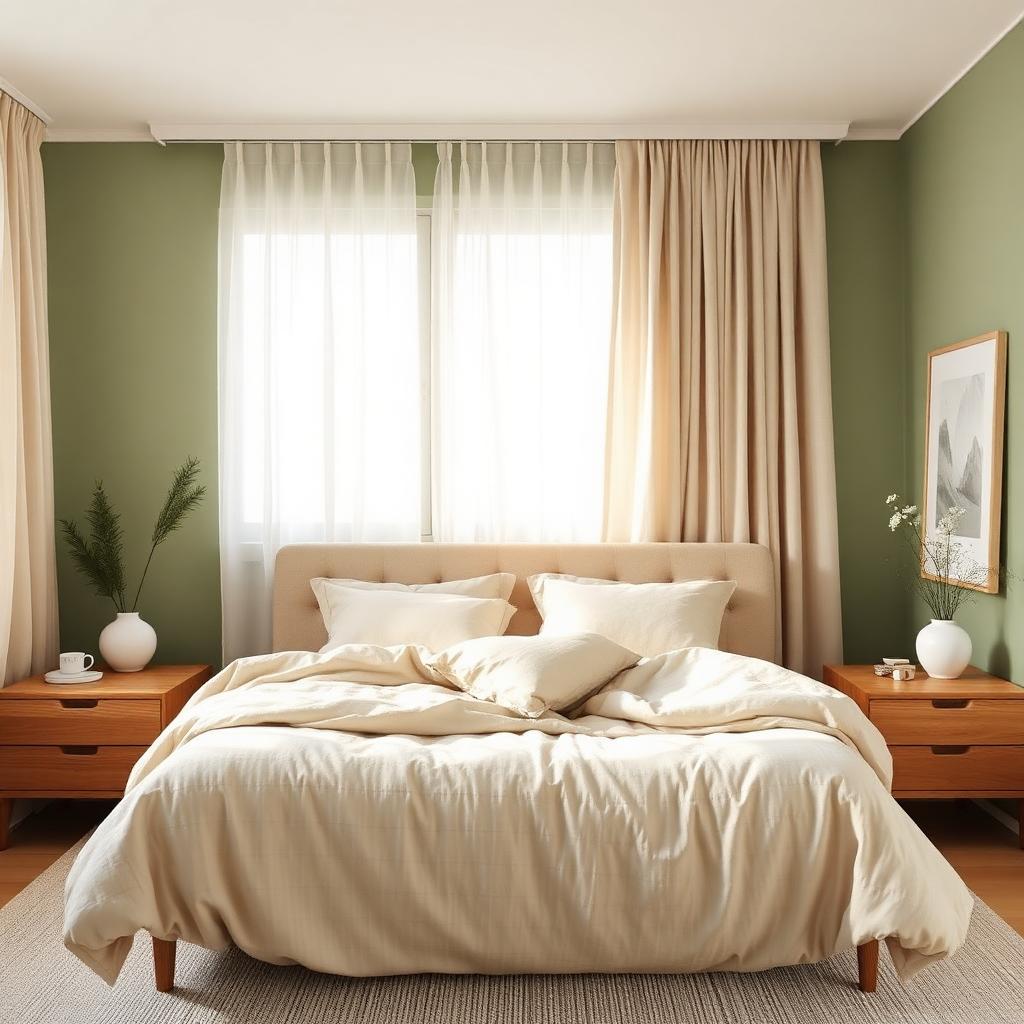
Cool, muted tones — soft blues, greens, warm grays, and putty neutrals — are associated with lower heart rates and faster sleep onset in multiple studies. Avoid high-saturation reds and oranges on large surfaces. Matte finishes outperform glossy ones at reducing reflected light.
Lighting temperature
Bedside lamp bulbs should be 2200–2700K (warm white). Even better, install dimmer switches and step bulbs down to amber-tinted "sleep" bulbs (1800K) for the last hour before bed. Eliminate all 4000K+ "daylight" bulbs from the bedroom — they suppress melatonin production for hours.
Noise and soft surfaces
Hard floors and bare walls amplify sound. A rug under the bed, curtains rather than blinds, and an upholstered headboard significantly reduce ambient noise. A white-noise machine or fan masking 40–50dB has been shown in multiple studies to improve sleep depth.
Temperature control
The research-backed sleep range is 60–67°F. Heavy duvets that you fight off at 3am are common signs of an over-warm room. Breathable natural fibers (linen, cotton, wool) regulate temperature far better than synthetics.
Visual clutter
A 2015 study at St. Lawrence University found that cluttered bedrooms were associated with worse sleep quality independent of other factors. Closed storage at the foot of the bed and clear surfaces on nightstands matter more than the specific style of the room.
Bed placement
The bed should face the door but not be directly in line with it ("commanding position"). Both sides of the bed should be accessible. Avoid placing the headboard against a window — drafts, noise, and morning light all disrupt sleep.
Bedding materials that regulate temperature
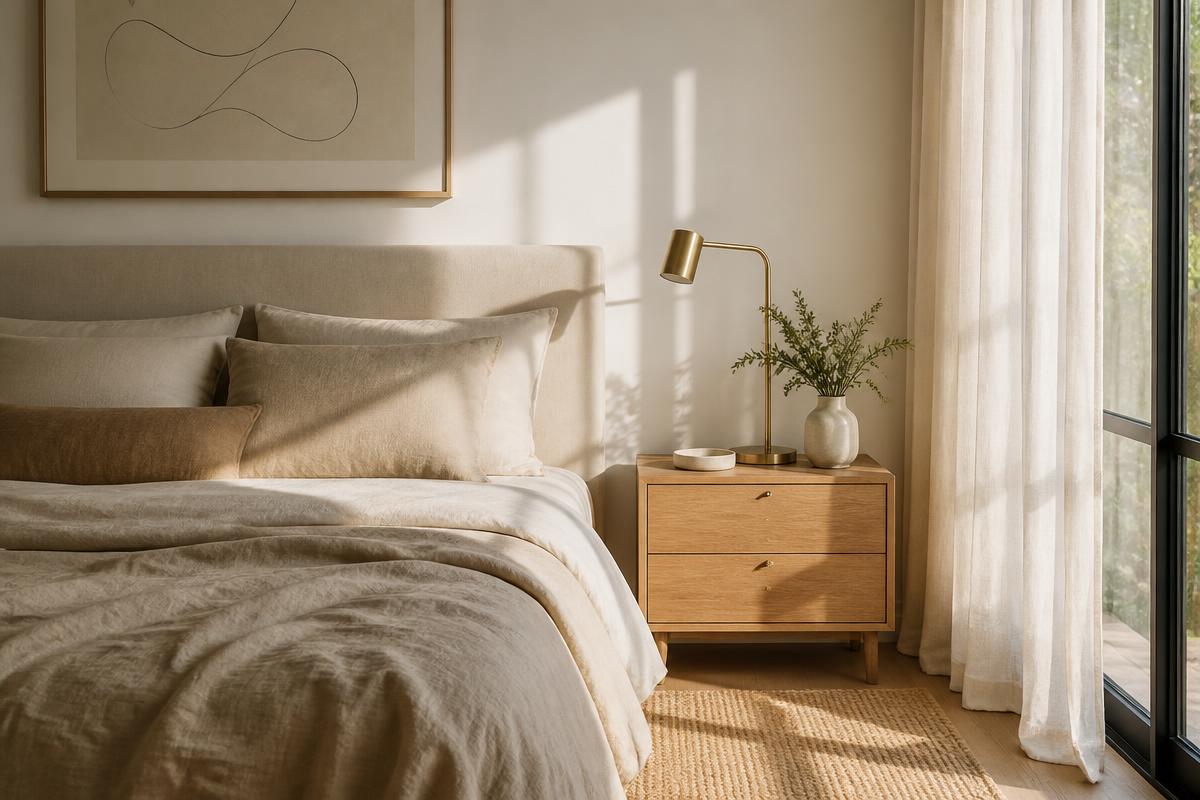
Bedding does more work for sleep quality than any single piece of furniture in the room. The general rule: natural fibers breathe; synthetics trap heat and moisture. Linen sheets are the gold standard for hot sleepers — they get softer with every wash, regulate temperature in a wide range, and last a decade. Long-staple cotton (percale weave for cool, crisp feel; sateen for soft, warmer feel) is the safer everyday choice. For duvets, look for a temperature-appropriate fill weight in down, wool, or silk rather than polyester. Wool in particular handles a surprisingly wide temperature range and resists dust mites.
Pillows are personal and replaceable. The right pillow keeps your neck in roughly the same alignment it has when you stand — side sleepers need more loft, back sleepers medium, stomach sleepers low. Replace pillows every 18–24 months; they accumulate skin oils, dust mites, and lose loft regardless of price.
Blackout and the morning light tradeoff
Two competing sleep facts pull window treatments in opposite directions. First, even small amounts of light during the night fragment sleep and suppress melatonin. Second, exposure to bright light in the morning is the single strongest cue to your circadian rhythm. The best compromise is layered window treatments — a blackout-lined curtain for the night, paired with a sheer or a manual roller blind that lets you flood the room with morning light within a few minutes of waking. Smart blinds that open on a sunrise schedule deliver this automatically and have measurable effects on morning alertness within two weeks of use.
Electronics, charging, and the bedroom boundary
Phones, tablets, and laptops belong outside the bedroom whenever possible. If that's not realistic, two design choices reduce the damage: put the charging station across the room from the bed rather than on the nightstand, and use a small analog or low-glow digital alarm clock instead of your phone. Both changes remove the strongest temptation to reach for a device when you wake at 3am. If you must charge by the bed, use a charging dock that physically holds the phone face-down with the screen dimmed.
Layout for primary bedrooms vs. small bedrooms
In a small bedroom, the priorities flip slightly. Closed storage matters more (a single visible pile of clothes dominates a small room). Wall-mounted bedside lights free up nightstand surface. A platform bed without a footboard makes the room read larger. In a primary bedroom with more square footage, a separate seating area — even just one armchair and a small lamp — creates a non-bed place to wind down, which research suggests helps strengthen the mental association between bed and sleep.
Designing the room for an evening routine
A bedroom that supports good sleep is one that supports the hour before sleep. A few design choices make that hour effortless: a comfortable reading chair or a generous pile of pillows for sitting up in bed, a dedicated low-light reading lamp on a separate switch from the overhead, a small side table large enough for a book and a glass of water but not large enough to become a junk drop, and a place to put your phone that is not the nightstand. The room should make winding down the easy option and scrolling the harder one. Architecture and furniture choices shape behavior far more reliably than willpower does.
If you remember nothing else from this guide, remember this: dark, cool, quiet, and uncluttered. Every other decision is a refinement on those four words, and a room that nails them will outperform a beautifully styled room that doesn't.
A sleep-friendly bedroom is not a more expensive bedroom — it is a more disciplined one. Strip out the wrong light, the wrong colors, the wrong noise, and the wrong screens, and the room itself becomes part of how you sleep, not just where you sleep. Most readers see a noticeable difference within two weeks of changing the bulbs alone, and a compounding one across the first month as bedding, layout, and routine settle into place around the new conditions. None of these choices require renovation; almost all of them can be made on a weekend with under $200 of bulbs, curtains, and a white noise machine.
Frequently asked questions
Frequently asked questions
- Is it bad to have a TV in the bedroom?
- Sleep research consistently associates bedroom TVs with later bedtimes, shorter total sleep, and lower sleep quality, primarily because of the blue light and content stimulation. If you keep one, set it to power off well before bedtime.
- Does bedroom color really affect sleep?
- Yes, modestly. Cool, low-saturation colors are associated with calmer physiological states. The effect is real but smaller than the effects of light, temperature, and clutter — focus on those first.