Small Kitchen Design Ideas: 10 Space-Saving Layouts That Cook Beautifully
Ten layout, storage, and lighting decisions that make a small kitchen work harder — tested in apartments, galleys, and 90-square-foot cottage kitchens.

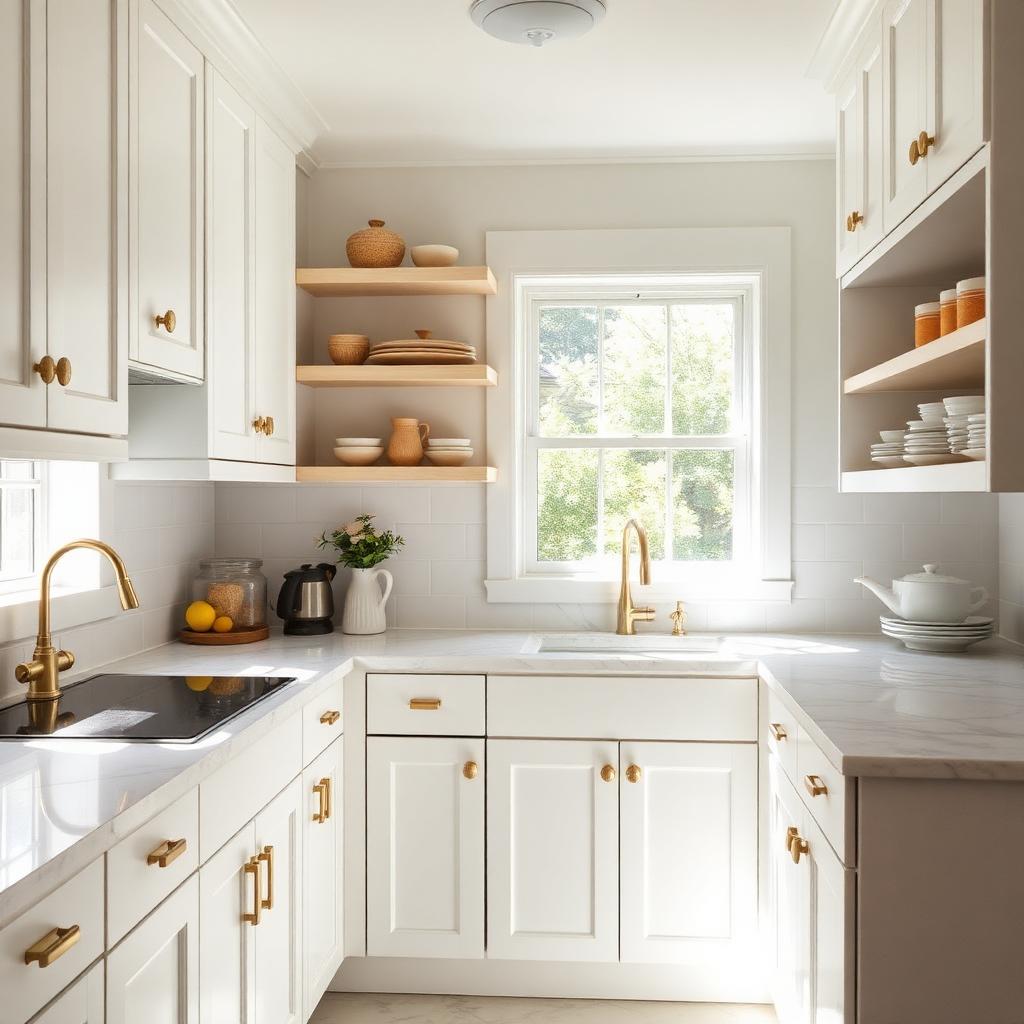
A small kitchen is not a compromise — it's a design constraint that forces better decisions. Big kitchens hide bad planning; small kitchens punish it immediately. After redesigning our own 78-square-foot galley twice and helping friends solve everything from studio kitchenettes to narrow row-house kitchens, these are the ten decisions that consistently make small kitchens cook, look, and live better.
1. Redraw the work triangle
The classic sink–stove–fridge triangle assumes a kitchen big enough to walk between stations. In small kitchens the "triangle" collapses into a line, and that's fine — as long as the sink is between the stove and the fridge. Cold food comes out of the fridge, gets prepped and washed at the sink, and moves to the stove. Any layout that forces you to cross the same 18 inches of counter twice will feel cramped forever.
2. Prioritize one long counter run
Two 24-inch counters on opposite walls feel worse than one uninterrupted 48-inch counter. Whenever possible, consolidate prep space on the longest wall and put the sink or stove on the shorter one. Uninterrupted counter is what small kitchens use to fake bigness — it's where the cookbook opens, the cutting board lands, and the groceries get unloaded.
3. Take cabinets to the ceiling
Standard upper cabinets stop 12–18 inches below the ceiling, creating a dead zone that collects dust and visually chops the room. Full-height cabinets add roughly 30% more storage and make an 8-foot ceiling feel taller because the eye travels all the way up. Store rarely-used items (holiday platters, tall pitchers, spare small appliances) up top and everyday dishes at reach height.
4. One open shelf, not four
Full walls of open shelving look great in magazines and terrible in practice — everything you own becomes a visual accessory, dust settles fast, and cooking splatter goes on your good glasses. One well-styled open shelf near the sink for daily mugs and plates is enough. Keep the rest behind doors.
5. Under-cabinet lighting
The single highest-impact upgrade in a small kitchen. LED strips or puck lights under the uppers eliminate the shadow your body casts onto the counter when you prep, make the backsplash a visible design element, and add ambient light in the evening. Warm-white (2700K–3000K) strips look like sunlight; cool-white strips look like a hospital.
6. Deep drawers beat lower cabinets
If you're renovating, replace lower cabinets with deep drawers wherever possible. You can see everything without kneeling and pawing through, heavy pots slide out instead of being lifted, and organization is finally possible. A 30-inch bank of three deep drawers holds more than a 30-inch cabinet with a shelf, and it's dramatically more usable.
7. Right-size the appliances
A full-size 36-inch fridge in a small kitchen is often the wrong choice — a 24-inch counter-depth fridge frees an entire cabinet's worth of counter and looks intentional. A 24-inch dishwasher is standard; an 18-inch model buys you an extra 6 inches of cabinet. A single-basin sink beats a double in tight kitchens because you can wash sheet pans without turning them sideways.
8. Vertical wall storage
Every wall in a small kitchen is potential storage. Magnetic knife strips replace a knife block. A slim rail with S-hooks holds measuring cups, tongs, and mugs. A single pegboard panel between the counter and the upper cabinets can hold pans, utensils, and a small planter. The goal isn't to fill every inch — it's to move daily items off the counter without burying them in drawers.
9. Keep the color story tight
Small kitchens survive one dominant color, one wood tone, and one metal finish. Add a fourth and the eye can't rest. White or cream cabinets, oak or walnut wood, and one metal (brass, black, or brushed nickel — pick one) is a formula that works in almost any style. Add color through art or a single small appliance, not through mixed finishes.
10. Add one reflective surface
A polished marble or quartz counter, a mirrored backsplash tile, or even a glass-fronted upper cabinet bounces light around the room and makes it feel larger. You only need one — a fully mirrored kitchen tips into disco territory. My favorite trick: a single row of glass-fronted uppers above the sink with the interior painted a soft color. It reads as architecture, not decor.
Common small-kitchen mistakes
Three patterns come up over and over in small kitchen renovations I've reviewed: buying too much cabinetry (leaving no counter to prep on), choosing a huge farmhouse sink that eats the only usable counter run, and installing a range hood so large it visually swallows the wall. Small kitchens reward restraint. Every square foot of counter is worth more than every square foot of storage — plan the counter first, then fit storage around it.
Keep it working over time
Small kitchens fall apart faster than big ones because there's no slack. Once a month, pull everything off the counter and put back only what you used that week. Small appliances you touch twice a year belong in a closet or the top cabinet — not in the daily footprint. This ten-minute reset is what separates a small kitchen that feels curated from one that feels crowded.
Frequently asked questions
- What is the ideal layout for a small kitchen?
- A single-wall or galley layout with the sink between the fridge and stove works best. It keeps the workflow linear and preserves the longest possible counter run.
- Are open shelves a good idea in a small kitchen?
- One well-styled shelf, yes. Full walls of open shelving turn every item into visual clutter and require constant dusting.
- Should cabinets go to the ceiling in a small kitchen?
- Yes — full-height cabinets add roughly 30% more storage and make the ceiling feel taller by drawing the eye up.
Frequently asked questions
- What is the ideal layout for a small kitchen?
- A single-wall or galley layout with the sink between fridge and stove keeps workflow linear and preserves counter space.
- Are open shelves good in a small kitchen?
- One well-styled shelf works; full walls of open shelving create visual clutter and dust.
- Should cabinets go to the ceiling?
- Yes — you gain about 30% more storage and the ceiling feels taller.